


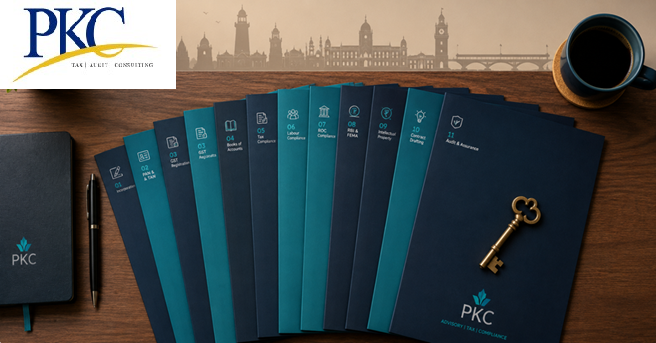
| You need 11 core documents required for capital gain tax on sale of property: the registered sale deed, the original purchase deed, stamp duty receipts, a 2001 valuation report, improvement bills, transfer expense proofs, Form 26QB with Form 16B, bank statements, CGAS deposit proof, reinvestment papers, and an AIS reconciliation note. Missing even one can invite an income tax scrutiny notice. |
Your quick checklist
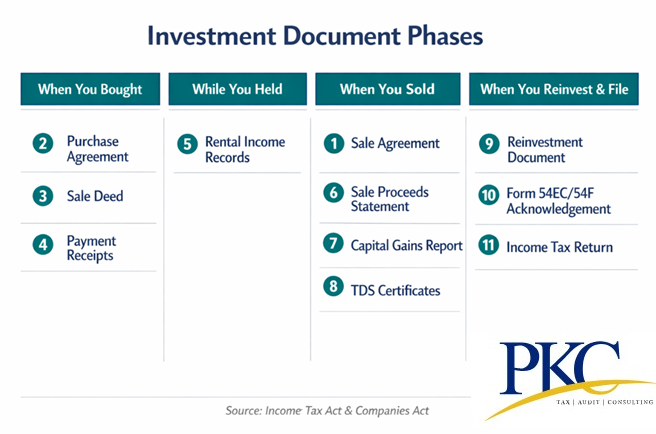
- Registered sale deed for the current transaction
- Original purchase deed of the property
- Stamp duty and registration fee receipts
- Fair market value report as on 1 April 2001
- Cost of improvement bills and approvals
- Transfer expense proofs such as brokerage and legal fees
- Form 26QB challan and Form 16B TDS certificate
- Bank statements showing the full consideration trail
- Capital Gains Account Scheme deposit proof
- Reinvestment proofs under Section 54, 54EC, or 54F
- AIS, Form 26AS, and TIS reconciliation note
1. Registered Sale Deed
The registered sale deed fixes your date of transfer and your full sale consideration.
Every capital gains computation starts here. The deed establishes the transfer date that decides short term or long term treatment, since land and buildings need a holding period above 24 months for long term status. It also locks the consideration figure the department compares against the guideline value. In Tamil Nadu, the Sub Registrar records the transaction against TNREGINET guideline value, and Section 50C deems the stamp duty value as your sale price when it exceeds the deed value by more than 10 percent.
Why it matters: you cannot argue a lower sale figure later if the deed already says otherwise, so verify every number before registration.
2. Original Purchase Deed
Your purchase deed proves the cost of acquisition, the single biggest deduction in the computation.
The capital gain tax on sale of property falls only on the gain, not the gross sale price. The purchase deed evidences what you paid and when, which drives holding period and indexation eligibility. Sellers who bought before 23 July 2024 can pick 20 percent with indexation or 12.5 percent without it, and the choice needs a documented acquisition date and cost. Lost the deed? Apply for a certified copy from the Sub Registrar office where it was registered before you file.
Why it matters: without acquisition proof the assessing officer can substitute a lower cost and tax a gain you never made.
3. Stamp Duty and Registration Fee Receipts
Stamp duty and registration charges paid at purchase form part of your cost of acquisition.
Tamil Nadu charges 7 percent stamp duty plus a 4 percent registration fee on conveyance, so a Chennai buyer of a 1 crore rupee property paid around 11 lakh rupees in statutory charges. Those receipts raise your cost base and cut the taxable gain directly. Many sellers forget these were even deductible. Pull the original challans, or request duplicates through the Registration Department if the purchase happened years ago.
Why it matters: every rupee of documented cost saves you 12.5 to 20 paise of tax, so these receipts are money.
4. Fair Market Value Report as on 1 April 2001
For property acquired before 1 April 2001, a registered valuer report substitutes fair market value for actual cost.
Old family purchases often carry tiny deed values. The law lets you adopt the fair market value on 1 April 2001 as your cost, capped at the stamp duty value on that date, and index it from there using the cost inflation index, which stands at 376 for FY 2025 26. Only a report from a government registered valuer survives assessment. Estimates from brokers or property portals do not.
Why it matters: a proper 2001 valuation can shrink a decades old gain dramatically, and a missing report is a classic scrutiny trigger.
5. Cost of Improvement Bills and Approvals
Contractor invoices, material bills, and sanctioned plans prove capital improvements you can add to cost.
An added floor, a compound wall, or a full structural renovation qualifies as cost of improvement and gets indexed from the year of spend. Routine repairs and repainting do not. Keep contractor agreements, GST invoices, payment proofs, and the CMDA or local body approval where the work needed one. Cash paid to unregistered contractors with no paper trail is the deduction the department disallows first.
Why it matters: you claim improvements once and defend them for years, so the bill file decides the outcome.
6. Transfer Expense Proofs
Brokerage, legal fees, and advertising costs incurred wholly for the sale are deductible from consideration.
Section 48 allows expenditure incurred wholly and exclusively in connection with the transfer. A 1 or 2 percent brokerage on a Chennai apartment sale is a meaningful deduction, but only with a broker invoice and a banked payment. The same goes for drafting charges, encumbrance certificate fees, and paper publication costs for title notices. Collect each receipt at the time of the sale, not months later.
Why it matters: undocumented brokerage is disallowed in nearly every assessment, and you lose the deduction plus credibility.
7. Form 26QB Challan and Form 16B
The buyer deducts 1 percent TDS under Section 194IA when consideration is 50 lakh rupees or more, and your Form 16B proves it.
The buyer files Form 26QB within 30 days from the end of the month of deduction and issues Form 16B to you. Confirm the challan quotes your correct PAN, the right sale value, and your correct ownership share if the property has joint owners. A wrong PAN means your TDS credit never reaches your Form 26AS, and the mismatch between reported TDS and your return is exactly the sort of gap that generates an income tax scrutiny notice.
Why it matters: you carry the consequence of the buyer’s filing errors, so chase the 16B before you hand over possession.
8. Bank Statements Showing the Consideration Trail
Bank statements must show every rupee of consideration moving from buyer to seller through banking channels.
Section 269SS bars accepting 20,000 rupees or more in cash for an immovable property transaction, and Section 271D levies a penalty equal to the amount received. Beyond the penalty risk, the department reconciles your deed value against your credits. A deed that says 90 lakh rupees against bank credits of 75 lakh rupees reads as suppressed consideration. Highlight the relevant credits, keep the sale agreement showing the payment schedule, and preserve advance receipts.
Why it matters: the money trail is the first thing an assessing officer opens, and a clean one closes most questions unasked.
9. Capital Gains Account Scheme Deposit Proof
Unutilised gains parked in a CGAS account before your return due date preserve your exemption claim.
Sellers who have not yet bought or built the new house by the return filing due date must deposit the unutilised gain in a Capital Gains Account Scheme account with an authorised bank. The deposit slip and account statement are your exemption evidence for the interim years. Withdrawals must go toward the new property, and amounts left unused when the window closes become taxable in that later year.
Why it matters: miss the deposit deadline and the exemption dies in the very first year, with no route to revive it.
10. Reinvestment Proofs Under Section 54, 54EC, or 54F
The new house deed or bond certificates convert your exemption claim from intention into evidence.
Section 54 needs the new residential house purchased within 2 years, or 1 year before sale, or constructed within 3 years, with the exemption capped at 10 crore rupees. Section 54EC needs REC, PFC, or IRFC bond certificates for up to 50 lakh rupees invested within 6 months of transfer. Keep allotment letters, construction agreements, and stage payment proofs. From 1 April 2026 the Income Tax Act 2025 renumbers these provisions, and your CA should quote both references during the transition.
Why it matters: exemptions claimed without matching paper are the most litigated line in property assessments.
11. AIS, Form 26AS, and TIS Reconciliation Note
A one page reconciliation between your return and the department’s own data ends most scrutiny risk before it starts.
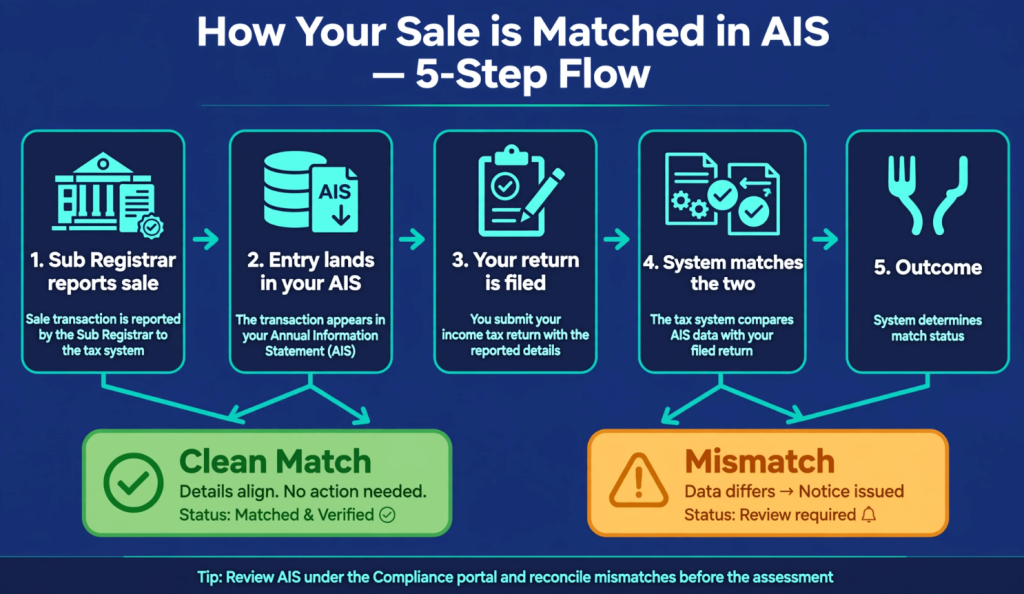
The Sub Registrar reports property transactions of 30 lakh rupees or more to the department, and the entry lands in your Annual Information Statement. Before filing, download the AIS, Form 26AS, and TIS, match the reported sale value, TDS, and ownership share against your computation, and record the reason for any difference, such as joint ownership splits. Most income tax scrutiny notices on property deals begin as a machine flagged mismatch between the AIS and the return, not as a human suspicion. Your documents required for capital gain tax on sale of property file should close with this note on top.
Why it matters: you see the same data the department sees, so reconciling it first means you answer the question before it gets asked.
Capital Gain Tax on Sale of Property: Document Proof Matrix
| Document | What it proves | Issued by | Risk if missing |
|---|---|---|---|
| Sale deed | Transfer date, sale value | Sub Registrar | Section 50C addition |
| Purchase deed | Cost and holding period | Sub Registrar | Cost substituted lower |
| Stamp duty receipts | Statutory cost additions | Registration Dept | Deduction lost |
| 2001 valuation report | Fair market value base | Registered valuer | Inflated gain taxed |
| Improvement bills | Capital improvement cost | Contractors | Disallowance |
| Transfer expense proofs | Section 48 deductions | Broker, lawyers | Deduction lost |
| Form 26QB and 16B | 1 percent TDS credit | Buyer via TRACES | TDS credit denied |
| Bank statements | Full consideration trail | Your bank | Suppression inference |
| CGAS proof | Interim exemption parking | Authorised bank | Exemption denied |
| Reinvestment papers | Section 54, 54EC, 54F claim | Registrar, bond issuers | Exemption litigated |
| AIS reconciliation | Return matches dept data | You or your CA | Scrutiny notice |
How PKC Management Consulting Helps
PKC’s tax team in Chennai builds the complete evidence file before your return goes in. We compute the gain under both rate options, obtain the 2001 valuation where needed, reconcile your AIS line by line, and structure Section 54 and 54EC claims with the paperwork already assessment ready. If a notice has landed, our litigation desk drafts the response and represents you before the department. Book a free 30 minute consultation with a PKC property tax specialist before you sign the sale deed, not after.
Frequently Asked Questions
What documents do I need for capital gains tax when I sell my house?
You need the sale deed, purchase deed, stamp duty receipts, improvement bills, transfer expense proofs, Form 16B for TDS, bank statements, and reinvestment or CGAS proofs if you claim exemptions. Add a 2001 valuation report for older property and an AIS reconciliation before filing.
How do I prove the cost of acquisition of my property?
Your registered purchase deed is the primary proof, supported by stamp duty and registration receipts from the time of purchase. If the property came to you before 1 April 2001, a government registered valuer’s report of fair market value on that date can replace the actual cost.
What is Form 26QB and who files it?
Form 26QB is the challan the buyer files to deposit 1 percent TDS under Section 194IA when the sale value is 50 lakh rupees or more. The buyer files it within 30 days from the end of the month of deduction and then issues Form 16B to you as the seller.
Do I need a valuation report for property bought before 2001?
Yes, if you want to adopt fair market value on 1 April 2001 as your cost, which almost always cuts the gain. Only a report from a registered valuer holds up in assessment, and the value you adopt cannot exceed the stamp duty value on that date.
What proof do I need to claim Section 54 exemption?
Keep the new house purchase deed or construction agreement, stage payment receipts, and possession letter. If the money is not fully used by your return due date, the Capital Gains Account Scheme deposit slip becomes your proof. The exemption is capped at 10 crore rupees.
What happens if my AIS does not match my property sale?
The department’s system flags the gap and can issue a scrutiny or e verification notice automatically. Reconcile before filing instead. Note the reason for the difference, such as a joint ownership split or a corrected sale value, and keep that working ready to submit.
Closing
Your paperwork decides your tax outcome long before any officer does. Build this 11 document file the week you decide to sell. Talk to PKC Management Consulting’s Chennai tax team today and walk into your property sale with the evidence already stacked in your favour.





Add Comment