

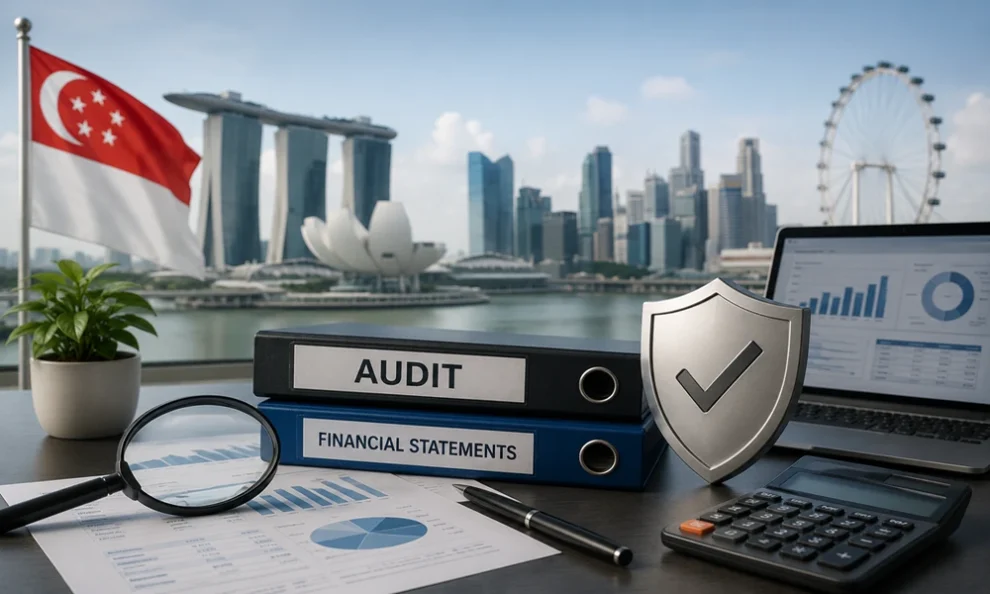

Singapore’s best auditor is one who is registered with ACRA, has relevant industry audit experience, and communicates findings clearly rather than delivering a report full of jargon. SHKOH helps businesses understand exactly what to evaluate before committing to an audit firm, since the wrong choice can mean delays, higher fees, or missed issues.
Quick Summary
- Not all Singapore companies need an audit – exemptions apply for “small companies” under specific criteria
- A qualified auditor must be registered with ACRA under the Public Accountants register
- Audit timelines typically run 2-6 weeks depending on company size and record quality
- Red flags include vague fee structures and no clear engagement letter
- SHKOH helps businesses prepare records to shorten the audit process
Does Your Company Even Need an Audit?
Before searching for an auditor, it’s worth confirming whether your company is required to have one. Under the Companies Act, a company qualifies as a “small company” exempt from audit if it meets at least two of the following for two consecutive financial years:
- Total annual revenue of S$10 million or less
- Total assets of S$10 million or less
- 50 or fewer employees
Companies that are part of a group must also meet these thresholds on a consolidated basis. If your company doesn’t qualify for exemption, you’ll need a registered auditor.
What Makes an Auditor the Right Fit
1. ACRA Registration as a Public Accountant
This is non-negotiable. Only individuals registered with ACRA under the Public Accountants Oversight Committee can legally sign off on statutory audits in Singapore.
2. Relevant Industry Experience
An auditor familiar with your sector – whether it’s construction, F&B, or professional services – will spot industry-specific risks faster and ask more relevant questions during fieldwork.
3. Transparent Fee Structure
Audit fees vary based on company size, transaction complexity, and record quality. The best auditors provide a clear engagement letter outlining scope and fees upfront, avoiding surprise charges later.
4. Clear Communication of Findings
A good auditor doesn’t just hand over a report full of technical language. They walk business owners through key findings, flagged issues, and recommendations in plain terms.
The Typical Audit Process in Singapore
- Engagement & Planning – the auditor reviews your business structure and agrees on audit scope
- Fieldwork – testing of financial records, internal controls, and supporting documentation
- Review & Queries – the auditor raises questions on discrepancies or unclear entries
- Draft Report – findings are shared for management review before finalization
- Final Audit Report – signed off and submitted alongside statutory filings to ACRA
Red Flags to Watch For
- No formal engagement letter before work begins
- Reluctance to explain their fee breakdown
- No clear point of contact throughout the audit
- Pressure to sign off quickly without adequate fieldwork
- Lack of ACRA registration verification (this can be checked via ACRA’s public register)
How SHKOH Supports the Audit Process
While SHKOH’s own accounting team focuses on bookkeeping and tax, the firm helps clients get audit-ready by:
- Ensuring financial statements are prepared in line with SFRS before audit begins
- Organizing supporting documentation so fieldwork moves faster
- Coordinating directly with the appointed auditor to resolve queries quickly
- Advising on audit exemption eligibility to avoid unnecessary costs
This preparation work often shortens audit timelines significantly, since disorganized records are the most common cause of delays.
Questions to Ask a Prospective Auditor
- Are you registered with ACRA as a Public Accountant?
- How many audits have you completed in my industry?
- What is your typical turnaround time for a company of our size?
- Can you provide a sample engagement letter before we commit?
- Who will be my main point of contact during fieldwork?
Frequently Asked Questions
Q: Is every Singapore company required to have an audit? A: No. Companies qualifying as “small companies” under the Companies Act – meeting at least two of three criteria on revenue, assets, and employee count – are exempt from statutory audit.
Q: How much does an audit typically cost in Singapore? A: Costs vary widely based on company size and complexity, but businesses should expect a formal quote after the auditor reviews their financial scope during the engagement stage.
Q: How long does a typical audit take? A: Most audits for small to mid-sized companies take between 2 and 6 weeks, depending on how organized the financial records are before fieldwork begins.
Q: Can SHKOH act as my company’s auditor? A: SHKOH focuses on accounting, tax, and audit preparation services, and coordinates with independent ACRA-registered auditors to ensure a smooth statutory audit process.
Q: What happens if an audit uncovers discrepancies? A: The auditor will raise queries with management, and corrections are typically made to financial statements before the final signed report is issued.


Add Comment